AI Operations Builder

The machine showed the symptom. The system around it held the cause.

That habit started on the test floor and became the work: tracing friction back to hidden rules, handoffs, and knowledge. Now I build operations on purpose: across content operations, governed workflows, and AI systems.

How it works across six environments

Remote PH/APAC or US/EU hours · Available now

The problem

The tool works. It’s the operation around it that leaks knowledge, through steps the system never captured and handoffs it never defined.

Five years on the test floor taught me to see that system.

What actually fixes it

Diagnose where a process is losing reliability. Make its rules visible. Leave behind something other people can keep using.

  1. Diagnose

    Trace the friction back to the hidden rules, handoffs, and knowledge beneath the symptom.

  2. Make visible

    Turn what lives in people’s heads into rules, templates, and libraries the team can see.

  3. Leave behind

    Build the system so the next person inherits something usable, not a transcript of how it was done.

Episode 1 · Content operations

Content Systems

Letterbrace + Avalon Accounting
Production systems, reusable learning assets

Two engagements brought different production pressures: reliable client delivery at Letterbrace, reusable educational assets at Avalon Accounting. Both leaked the same way. Every asset started from scratch because the knowledge of how to make it lived in people’s heads, not in the workflow.

At Letterbrace the work was a pipeline: one multitrack interview session cut into 8–20 standalone clips, with templates, organized project structures, and feedback loops keeping delivery repeatable across as many as three clients at once. At Avalon it was the same move in a different shape: professional expertise captured once, then traveling through articles, videos, courses, and training materials without being recreated from scratch.
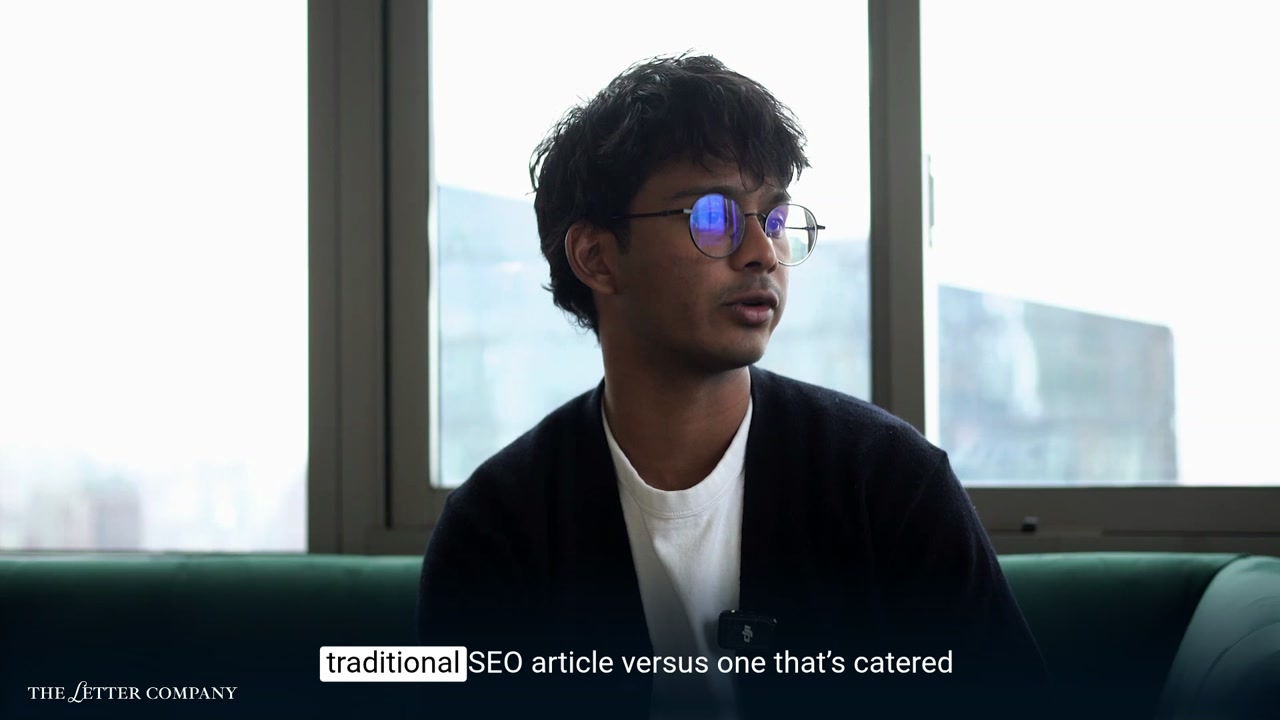
LetterbraceContent Workflow
An edited Letterbrace video frame with its caption treatment and client branding
One edited clip, with the template in use.

The case study walks through both systems: what the templates actually hold, how the projects stay organized across clients, and where the feedback loops sit.

See the repeatable production system

Making knowledge reusable solved one problem. The next was deciding what could be shared, and who had authority to decide.

Episode 2 · Governed workflows

Reformed Life Liturgy

Live · Weekly Active Use
1 Curator, 4 Compilers, ~50 web-view readers

Each week, Scripture, fixed liturgical formulas, prayer, and song had to become a coherent order of worship by hand. Two to three hours of compilation, dependent on knowledge the compiler carried personally, with review happening informally under rules that could shift from one situation to another.

The constraint on any fix came after: anything entering the shared library still needed a consistent path through the Curator responsible for it. A faster weekly service could not come at the cost of the person safeguarding it. Speed could remove repetition. It could not remove responsibility.

Morning WorshipCompiled service

August 30, 2026, Lord’s Day 35

Call to Worship *

Psalms 66:5, 8–9

Come and see the works of God; how awesome are His deeds toward mankind.

Congr: Bless our God, O peoples, let the sound of His praise be heard. He preserves our lives and keeps our feet from slipping.

Excerpt · Berean Standard Bible (public domain).

The system that resolved it keeps authority with the Curator while removing the repetition. Weekly compilation fell to 30–60 minutes. How the shared library, the compile view, and the review path actually work is the case study.

See how the liturgy ships weekly without losing its guardian

Knowledge and judgment could now survive a handoff between people. Could a project carry them between AI coding sessions?

Episode 3 · AI workflow systems

Galleon

Public · early development · 9 skills

The coding agent works. It’s the project around it that forgets. Every new session starts behind: purpose, decisions, and boundaries live in chat history, and the person directing the work becomes the one who keeps re-supplying them.

Galleon makes the same move on AI-assisted work. Nine narrow skills help a project write down where its context lives, who owns each decision, and what a job may change, in ordinary files the person can edit and the agent can read. Each skill does one job and names what it won’t do.

The answer wasn’t another framework on top of the project. It was the project’s own files, readable by the person directing the work and the agent doing it. The next session inherits a project, not a transcript.

See how a project explains itself

Part 2 · Experience

Different environments. The same systems instinct.

Six environments, one recurring job: diagnose the friction, make the rules visible, and leave behind a process other people can use.

  1. Physical operations

    At Analog Devices, investigated a recurring IC-testing handler reliability issue and documented the improvement process. Machine uptime improved approximately 30–40% during project evaluation; the original company artifacts are not in my possession.

  2. Content systems

    Produced reusable video and learning assets at Avalon Accounting, and interview clips at Letterbrace. AI-assisted editing, review, and organized project files supported repeatable delivery.

    Explore Content Systems
  3. Customer operations

    At Amazon and Teleperformance’s Lazada account, investigated customer and seller problems, applied policy, handled escalations, and documented resolutions. Amazon was direct employment; Lazada was a client account supported through Teleperformance.

  4. Business operations

    Rebuilt spreadsheet-based costing, production, and material tracking into structured software workflows for a 3D-printing micro-business client. The system is in production.

  5. Governed workflows

    Built Reformed Life Liturgy for weekly service compilation, with reusable libraries, Curator review, Word exports, and a public Web View. Weekly preparation fell from approximately 2–3 hours to 30–60 minutes.

    Explore Liturgy
  6. AI workflow systems

    Published Galleon: nine bounded agent skills that help projects retain contracts, ownership, and state in readable files, so people and coding agents work from the same record. An early-development edition with scoped verification results.

    Explore Galleon

A record of work.

5 years

Technical operations: keeping IC-test equipment running

4 years

Content operations across Avalon Accounting and Letterbrace

300+

Edited videos across Letterbrace and Avalon Accounting

~35

Organizations served across direct, freelance, and agency engagements

1M+

Avalon channel views during tenure, with the wider team

Have a process that depends too much on memory, workarounds, or one person?

Available for full-time, contract, or part-time work. Remote PH/APAC or US/EU hours.